
Data Analytics Course: Learn Skills, Tools and Career Opportunities
Discover how data analytics helps businesses make smarter decisions. Learn essential concepts, popular tools, practical skills and career opportunities to start your journey as a data analyst.
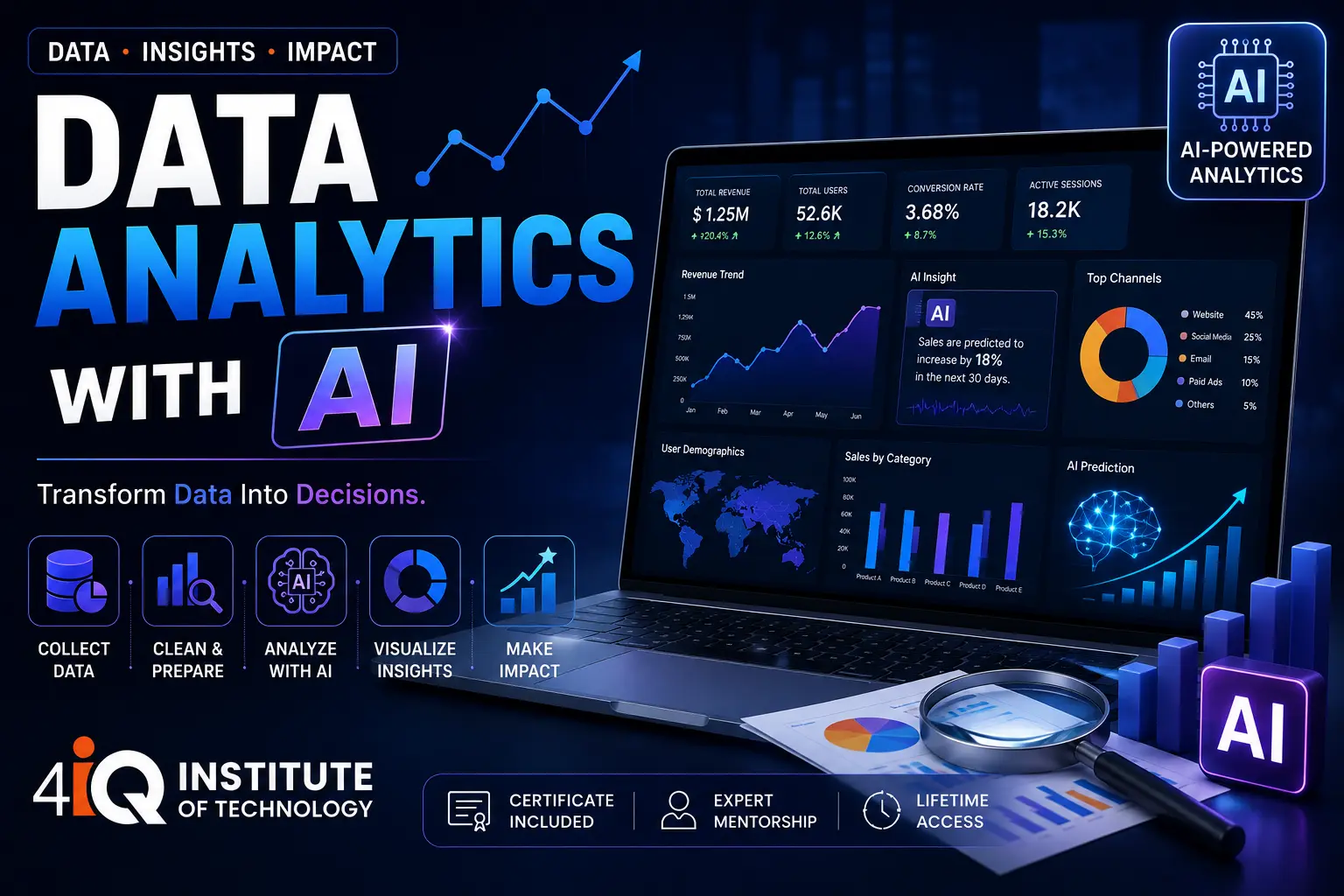
Turn Raw Data Into Meaningful Insights
Data Analytics Course is the process of collecting, cleaning, organizing and analyzing data to discover useful information. It helps organizations understand performance, identify trends and make better business decisions.
From sales reports to customer behavior, data analytics course is used across industries. Learning tools like Excel, SQL, Python and Power BI can help you develop practical analytical skills.
- Understand data analysis fundamentals
- Learn popular analytics tools
- Work with real-world datasets
- Explore career opportunities in analytics
What You’ll Learn in This Guide
Data Insights
Understand information and identify meaningful patterns.
Practical Tools
Learn Excel, SQL, Python and Power BI fundamentals.
Data Visualization
Create reports, charts and interactive dashboards.
Career Growth
Explore opportunities in different industries.
What Is Data Analytics?
Data Analytics is the practice of examining raw data to find useful patterns, relationships and insights. It involves different steps, including data collection, data cleaning, data transformation, analysis and visualization.
Businesses generate large amounts of data through websites, applications, sales, marketing campaigns and customer interactions. Data analytics helps convert this information into meaningful reports that support better planning and decision-making.
For example, an online store can analyze its sales data to identify popular products, understand customer preferences and improve marketing strategies.
Why Is Data Analytics Important?
Data analytics plays an important role in modern business operations. Instead of making decisions based only on assumptions, organizations can use data to understand what is working and where improvements are needed.
Better Decision-Making
Use accurate information to support business decisions and planning.
Customer Understanding
Analyze customer behavior, preferences and buying patterns.
Improved Efficiency
Identify operational problems and opportunities for improvement.
Performance Tracking
Monitor business performance through reports and dashboards.
Types of Data Analytics
Data analytics Course can be divided into four major types. Each type answers a different business question and supports a different level of decision-making.
Descriptive Analytics
Descriptive analytics explains what has happened in the past. It uses historical data, reports and dashboards to summarize business performance.
Example: Monthly sales reports and website traffic summaries.
Diagnostic Analytics
Diagnostic analytics helps understand why something happened. It examines data to identify possible reasons behind changes or unexpected results.
Example: Finding reasons behind a decrease in monthly sales.
Predictive Analytics
Predictive analytics uses historical data, statistical methods and machine learning techniques to estimate what may happen in the future.
Example: Forecasting future product demand.
Prescriptive Analytics
Prescriptive analytics suggests possible actions based on available data and predicted outcomes. It helps organizations evaluate different choices.
Example: Recommending inventory levels based on expected demand.
Popular Tools Used in Data Analytics
Data analysts use different tools to collect, organize, process and visualize information. Understanding these tools is an important part of developing practical data analytics skills.
Microsoft Excel
Excel is used for data entry, calculations, data cleaning, formulas, pivot tables and basic reporting.
SQL
SQL helps retrieve, filter, organize and manage data stored in relational databases.
Python
Python supports data cleaning, analysis, automation and visualization through useful libraries.
Power BI
Power BI helps create interactive dashboards and reports for business data analysis.
Tableau
Tableau is a data visualization platform used to explore information and present insights through charts.
Jupyter Notebook
Jupyter Notebook provides an interactive environment for writing Python code and analyzing datasets.
Essential Skills Required for Data Analytics
Becoming a data analyst requires a combination of technical, analytical and communication skills. These abilities help you understand data and explain findings clearly.
Important Skills to Develop
- Excel formulas, functions and Pivot Tables
- SQL queries and database fundamentals
- Python programming basics
- Data cleaning and data preparation
- Statistical and analytical thinking
- Power BI dashboards and reporting
- Data visualization and interpretation
- Problem-solving and communication skills
Data Analytics Course Modules
A structured learning path helps beginners understand data analytics step by step. The following topics cover important areas that learners can explore during their training.
Introduction to Data Analytics
Understand data analytics fundamentals, its applications, data types and the complete data analysis process.
Advanced Microsoft Excel
Learn formulas, functions, sorting, filtering, data validation, conditional formatting, Pivot Tables and charts.
SQL and Database Management
Explore database concepts, SELECT statements, filtering, sorting, joins, grouping and aggregate functions.
Python for Data Analytics
Learn Python fundamentals and explore libraries such as NumPy, Pandas and Matplotlib for data analysis.
Power BI and Data Visualization
Understand data importing, data transformation, relationships, visualizations and interactive dashboard creation.
Real-World Projects
Apply your learning through practical datasets, sales analysis, business reports and dashboard projects.
Practical Data Analytics Projects for Beginners
Working on projects helps learners apply theoretical knowledge to real-world problems. You can use sample datasets to practice data cleaning, analysis and visualization.
Sales Analysis Dashboard
Analyze revenue, product performance and monthly sales trends.
Student Performance Analysis
Study student marks, attendance and academic performance.
Customer Analysis
Explore customer segments, buying behavior and preferences.
Financial Report Analysis
Understand expenses, income and financial performance.
Career Opportunities After Learning Data Analytics
Data analytics skills are useful across industries such as finance, healthcare, education, e-commerce, retail and technology. Depending on your skills and experience, you can explore different career paths.
Data Analyst
Analyze datasets and prepare reports to support business decisions.
Business Analyst
Understand business requirements and identify improvement opportunities.
SQL Analyst
Work with databases to retrieve and organize useful information.
Power BI Developer
Create interactive dashboards and business intelligence reports.
Python Data Analyst
Use Python libraries to clean, process and analyze datasets.
Reporting Analyst
Prepare regular reports and track important business metrics.
Is Data Analytics a Good Career Choice?
Data analytics can be a valuable career path for people who enjoy working with numbers, solving problems and understanding patterns. With consistent practice, practical projects and knowledge of relevant tools, beginners can build a foundation for entry-level opportunities and further learning.
Frequently Asked Questions About Data Analytics
1. What is a Data Analytics Course?
2. Can beginners learn Data Analytics?
3. Which tools are used in Data Analytics Course?
4. Is coding required for Data Analytics?
5. Is Excel important for Data Analytics?
6. What is the role of SQL in Data Analytics?
7. What is Power BI used for?
8. What projects can beginners create?
9. What career options are available in Data Analytics?
10. Do I need mathematics for Data Analytics?
Start Your Data Analytics Learning Journey
Data analytics is an important skill in today’s information-driven world. Learning Excel, SQL, Python and Power BI can help you understand data and create meaningful reports. Start with the fundamentals, practice with real-world datasets and gradually build your analytical skills.
Whether you are a student, beginner or working professional, developing data analytics knowledge can help you explore new learning and career opportunities.
Build Your Future with Data Analytics Skills
Take the first step towards learning data analytics. Explore practical tools, develop problem-solving skills and discover new opportunities with 4IQ Institute.
Contact Us Today →